Establish a starting picture
Stop at a permitted viewpoint before taking photographs. Note what the animal is doing, where other animals are positioned, and what activity surrounds them. Feeding, resting, moving, or scanning may all be normal in context. A baseline is simply a short description of behavior before you deliberately change your position.
Do not assume your arrival went unnoticed. Animals may detect people before people detect them. Your starting picture is therefore a working reference, not proof of undisturbed behavior. Use it cautiously and keep the option of leaving open, especially near young, feeding sites, or narrow escape routes.
Write what you can see: “raised head three times while feeding” is more useful than “looked annoyed.” The first statement describes an observation. The second interprets a mental state you cannot directly establish.
Respond to possible disturbance early
Repeated vigilance, interrupted feeding, alarm calls, defensive displays, freezing, or movement away can indicate disturbance. These behaviors have other causes too. You do not need certainty that you are responsible before reducing pressure. Stop moving closer, lower the camera if appropriate, and retreat calmly along an established route.
Never use an animal’s failure to flee as evidence that it is comfortable. Some animals remain still as a defense; others tolerate pressure because leaving carries another cost. A resting animal may be conserving energy, and a parent may be reluctant to leave young. Avoid turning a quiet encounter into a test of tolerance.
Check local distance requirements before arrival. Yellowstone National Park, for example, publishes specific wildlife-viewing rules; other parks and reserves set their own. Rules differ by species and place, so do not transfer a number from one jurisdiction and call it universally safe.
Practise on an ordinary patch
Choose a familiar public location with clear access rules. Remain at one viewpoint for ten minutes and record broad activities at intervals. Include changes in weather, other visitors, dogs, vehicles, and nearby animals when relevant. Keep the exercise small enough that you can describe what happened without filling gaps from memory.
Afterward, separate your page into “observed,” “possible explanation,” and “unknown.” A bird leaving a perch is observed. Disturbance by a walker may be a possible explanation. Its destination, energy state, and reason for choosing that moment may remain unknown. This distinction is valuable even when the observation will never leave your notebook.
Repeated visits can reveal patterns, but informal watching is not automatically a controlled study. Different times, seasons, visibility, and observation effort change what you are likely to detect. Record those differences rather than treating a missing sighting as evidence of absence.
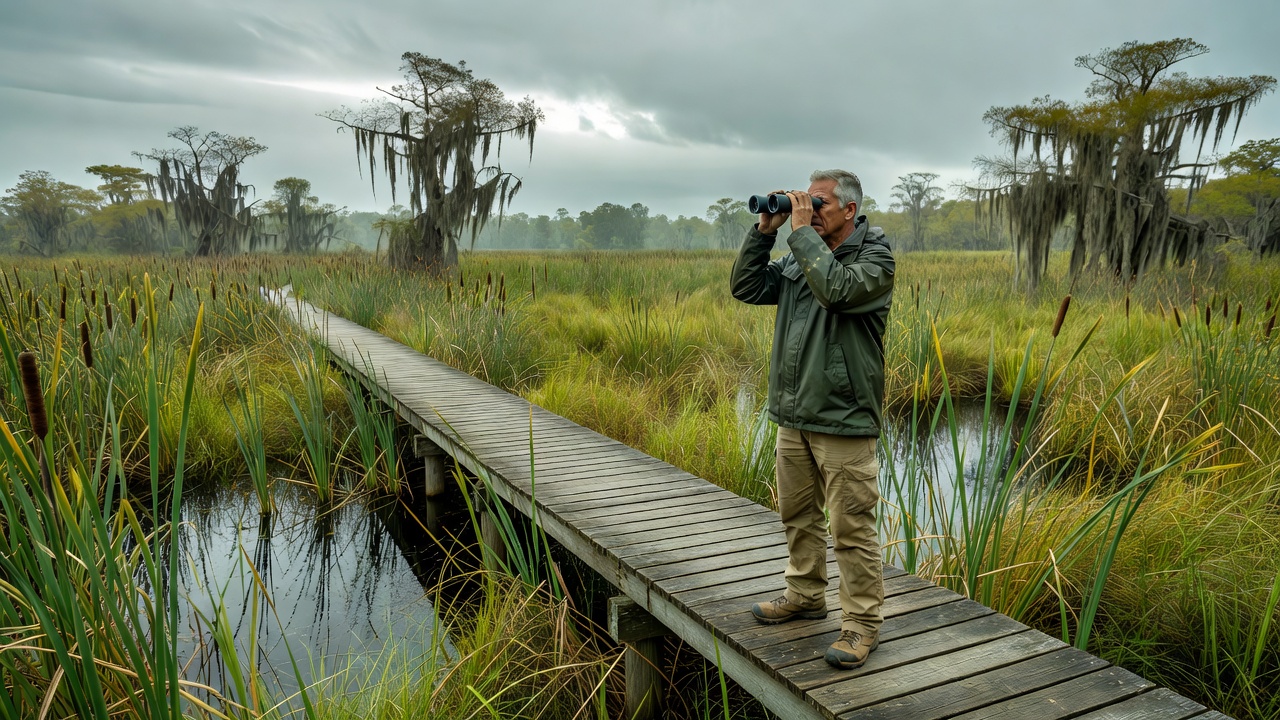
Protect the subject and the place
Do not use food, calls, pursuit, or physical handling to obtain a response for a photograph. Playback is the use of recorded animal sounds to attract or provoke attention. It can affect territorial or breeding behavior and may be restricted. A photography outing is not a reason to improvise a research procedure.
Keep away from nests, dens, roost entrances, and concentrated resting areas. Remain on permitted paths, respect seasonal closures, and avoid blocking a route between an animal and cover. If a qualified project requires different procedures, participate only within its training, approvals, and supervision.
For injured or apparently stranded wildlife, contact the appropriate local authority or licensed wildlife rehabilitator. Avoid handling, feeding, or relocating the animal unless a competent responder instructs you. Human safety and species-specific legal protections both matter.
Reference checks
- American Birding Association Code of Birding Ethics: welfare, habitat, and consideration for other observers.
- Yellowstone National Park safety guidance: an example of place-specific requirements, not a universal distance standard.
- iNaturalist geoprivacy guidance: understand location visibility before submitting observations.